Diesel Fuel Impact on Living Organisms
The Critical Problem
Diesel fuel contamination poses serious threats to human health and environmental sustainability, particularly affecting vulnerable communities in oil-producing regions like Nigeria.
Health Impacts
- Cancer development
- Kidney dysfunction
- Digestive disorders
- Respiratory complications
Environmental Effects
- Acid rain formation
- Soil contamination
- Crop productivity loss
- Ecosystem disruption
Regional Impact
- Nigeria + other African countries
- Oil-producing regions
- High industrial emissions
- Generational contamination
"When I was in Nigeria, my family was told not to eat any crops because they had been exposed to many toxins. People can't rely on the food they grow and its leading to generations of health problems."
Research Methodology
To safely study diesel fuel's impact on living organisms, I developed a controlled experiment using Arabidopsis Thaliana plants and chemical substitutes that simulate diesel exhaust components.
Experimental Design
My study simulated diesel exhaust exposure using substitute chemicals to assess plant growth, visual appearance, epigenetics, and potential epigenetic changes in Arabidopsis, a model organism widely used in plant research.
Components Used
Below are the kep components used in the Arabidopsis plant's water.
Ethanol Treatment
Simulates hydrocarbon compounds found in diesel exhaust. Applied to test plants to observe responses.
Sulfuric Acid
Represents sulfur compounds that contribute to acid rain formation. Used to simulate the acidic conditions plants face in polluted environments.
Arabidopsis Model
Selected as the test organism due to its well-known genome, rapid growth cycle, and established use in environmental stress research.
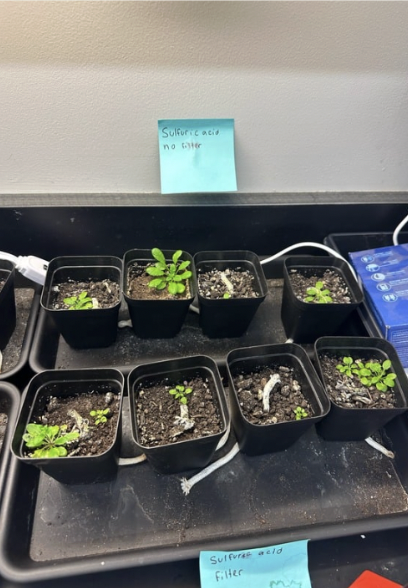
Plant Experiment Visuals
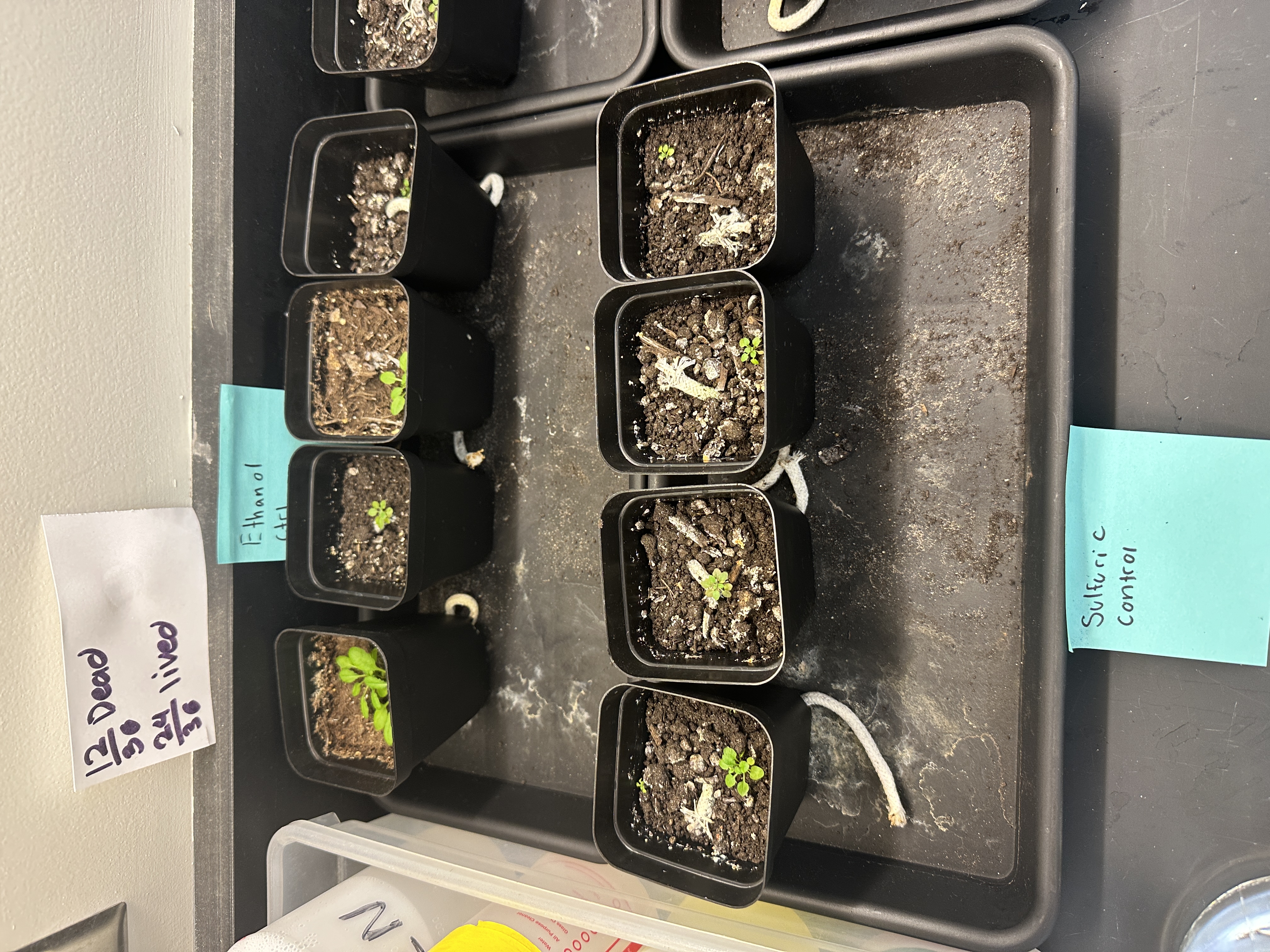
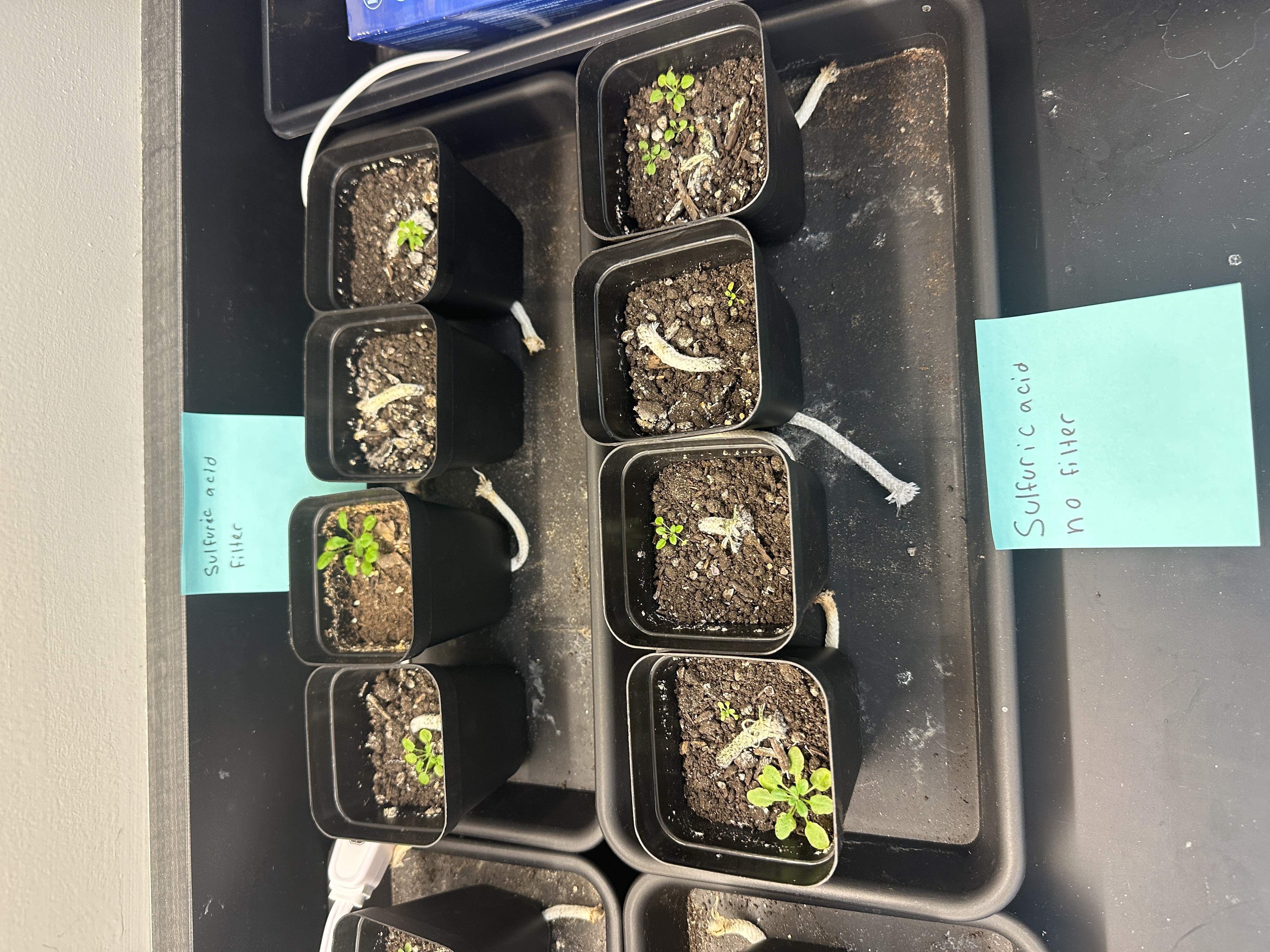
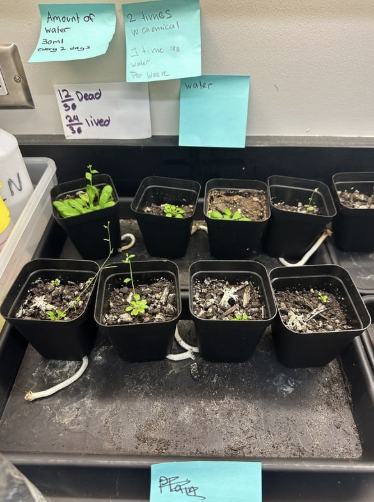
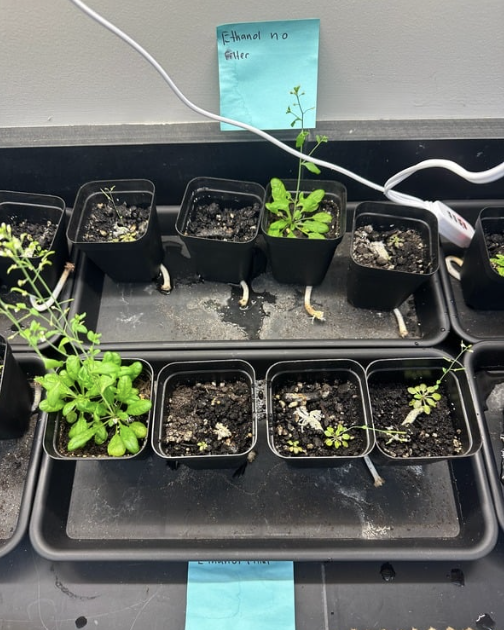
A closer look at the Arabidopsis plants during the different phases of the experiment, showcasing their growth and responses.
Before stressors

After stressors
Research Findings
My controlled experiments revealed significant differences in plant responses to various chemical treatments, providing insights into how diesel contamination affects living organisms.
Control Group
Plants grown under standard conditions without chemical treatment, serving as a baseline for comparison.
Ethanol Treatment
Plants exposed to low concentrations of ethanol showed unexpected positive responses, particularly in flowering.
Sulfuric Acid
Acid treatment significantly inhibited plant development, preventing normal flowering processes.
Scientific Insights
My findings were surprising: the ethanol-exposed plants exhibited enhanced flowering. These results align with established scientific principles and suggest potential mechanisms underlying plant adaptation to environmental stressors.
Hormesis Effect
Low concentrations of ethanol may act as beneficial stressors, triggering adaptive responses that enhance plant metabolism and growth. This phenomenon suggests that minimal exposure to certain toxins can paradoxically improve organism resilience.
Epigenetic Adaptation
Environmental stressors can induce heritable changes in gene expression without altering DNA sequence. My research suggests diesel exposure may trigger epigenetic modifications that increase offspring resistance to pollution in plants.
Plant Detoxification
Plants possess sophisticated mechanisms to neutralize harmful compounds, including enzymatic detoxification, cellular compartmentalization, and strengthened microbial interactions in the rhizosphere. Leveraging modern biotechnology to edit these genes could enable plants to provide cost-effective, environmentally sustainable solutions for mitigating pollution.
Future Applications
This research opens pathways for developing innovative solutions to environmental contamination while advancing understanding of organism adaptation to polluted environments.
Genetic Engineering
Isolating resilience genes from stress-adapted plants could enable the development of crops capable of thriving in contaminated soils.
Bioremediation
Engineering plants with enhanced detoxification capabilities could provide sustainable solutions for cleaning contaminated environments.
Human Health
Understanding plant stress responses could reveal how plants might be epigenetically engineered to resist pollution, improving air quality and benefiting human health.
Research Expansion
This foundational work could establish protocols for larger-scale studies on environmental contamination and organismal resilience.